
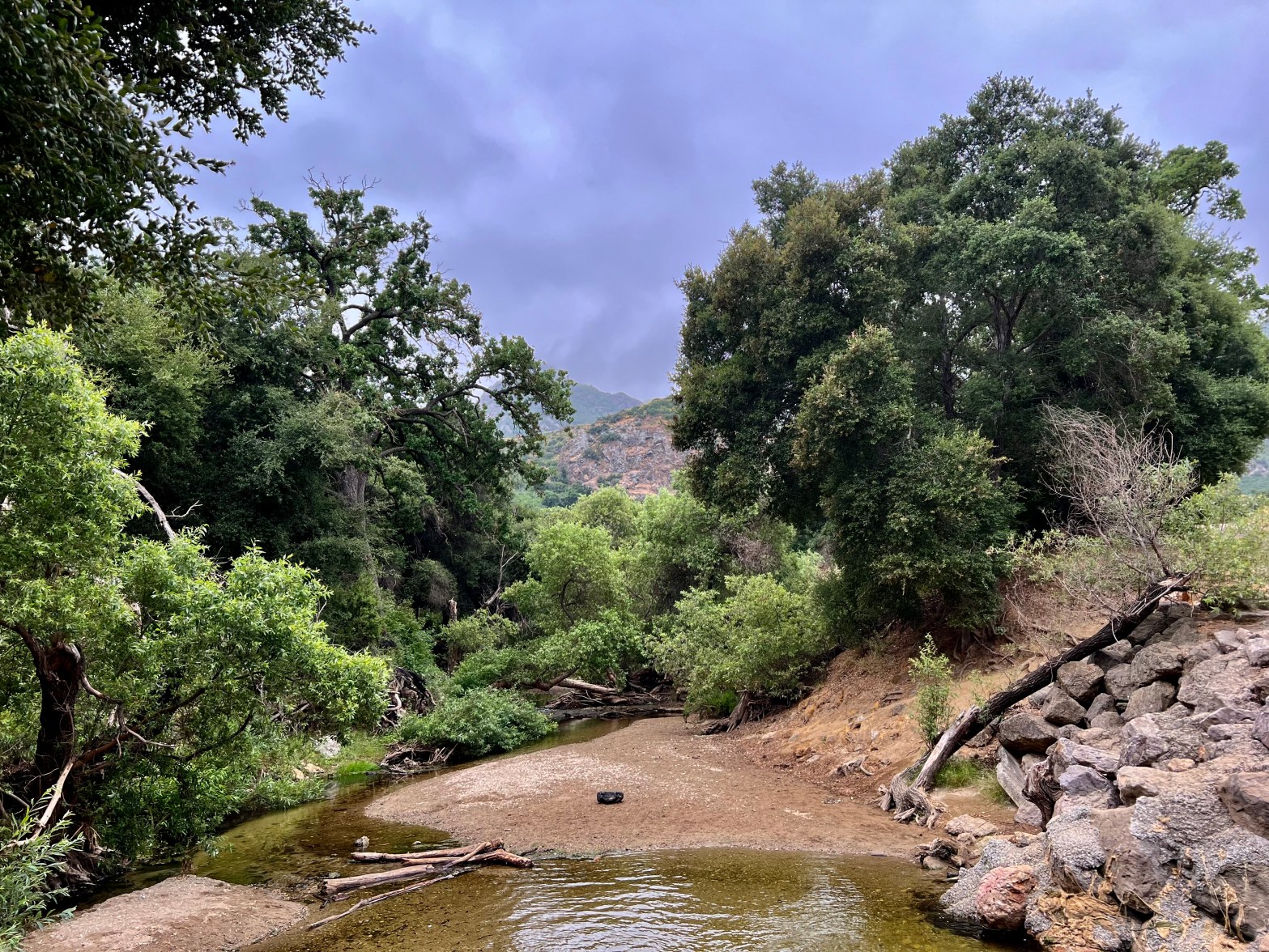
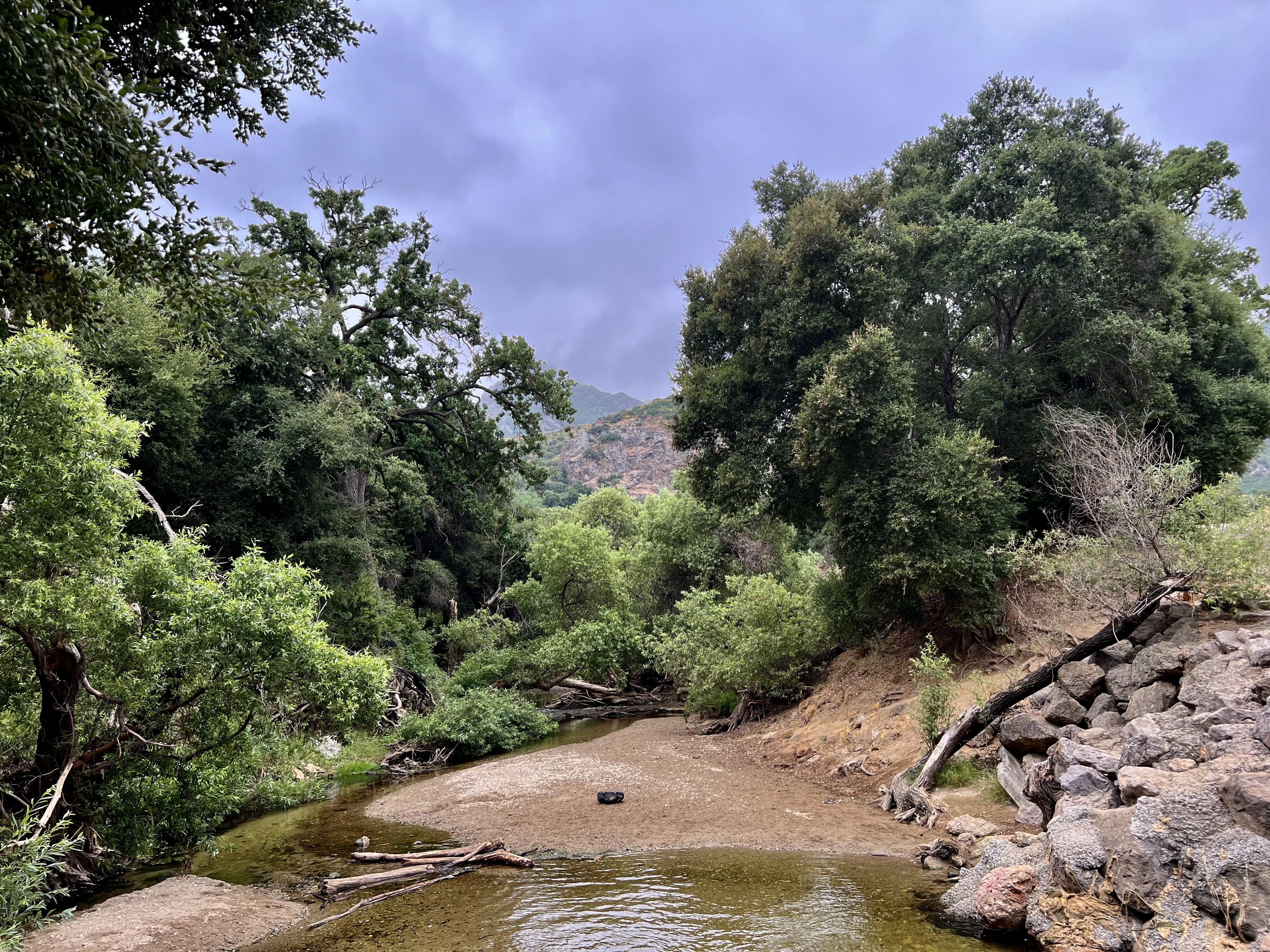
The day began with a seven am nature hike through Malibu Creek State Park led by Pepperdine Assistant Professor of Biology, Helen Holmlund and her students. We didn’t make to either the filming site of M*A*S*H or of the 1968 Planet of the Apes, but it was a satisfying start to the day, indeed, one filled with thoughts of the California Chaparral biome, of invasive spices, of natural remedies, and of a hedgehog building a home at the edge of the path who wasn’t going to be daunted by a biologist and a bunch of medievalists.
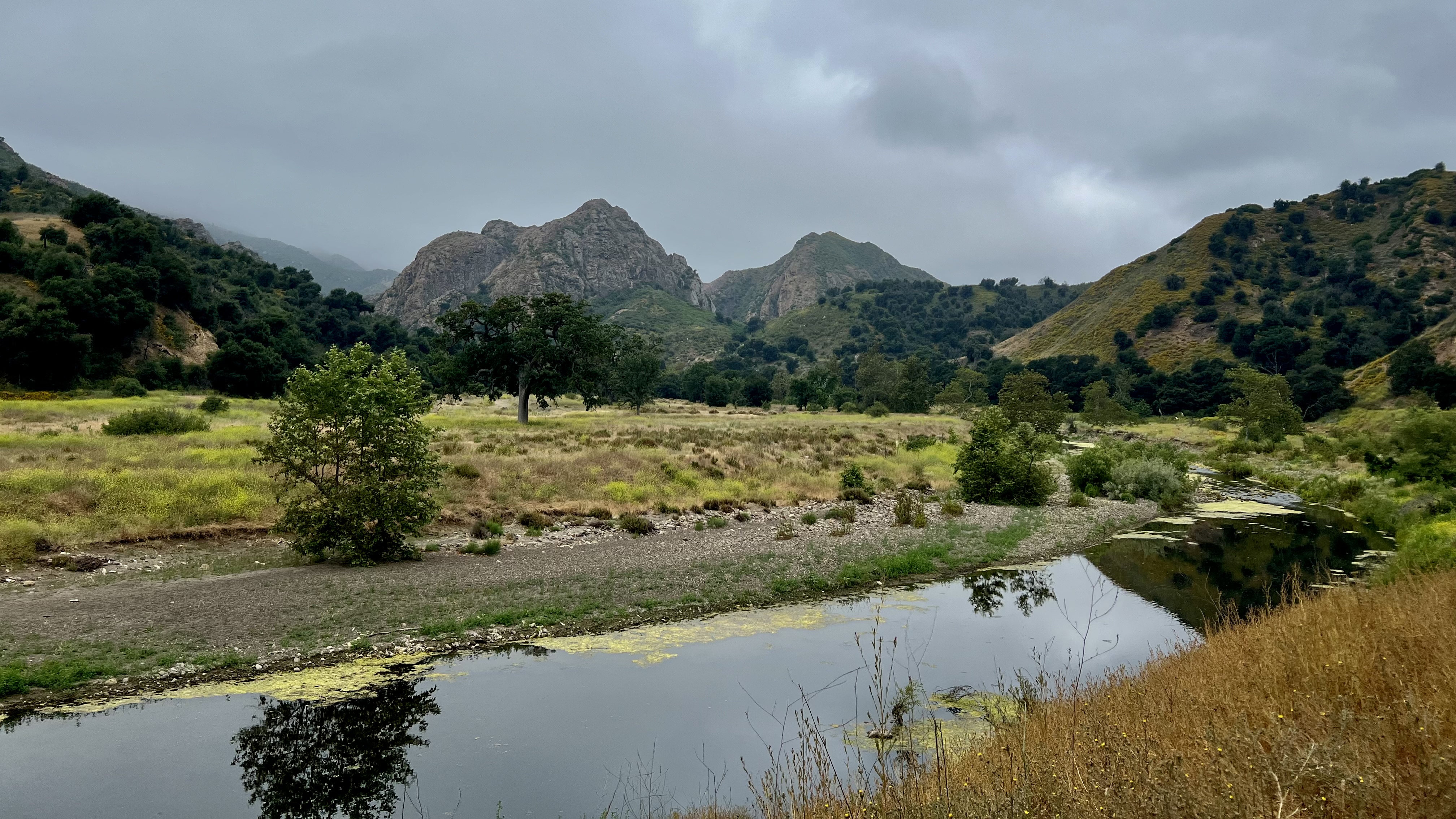
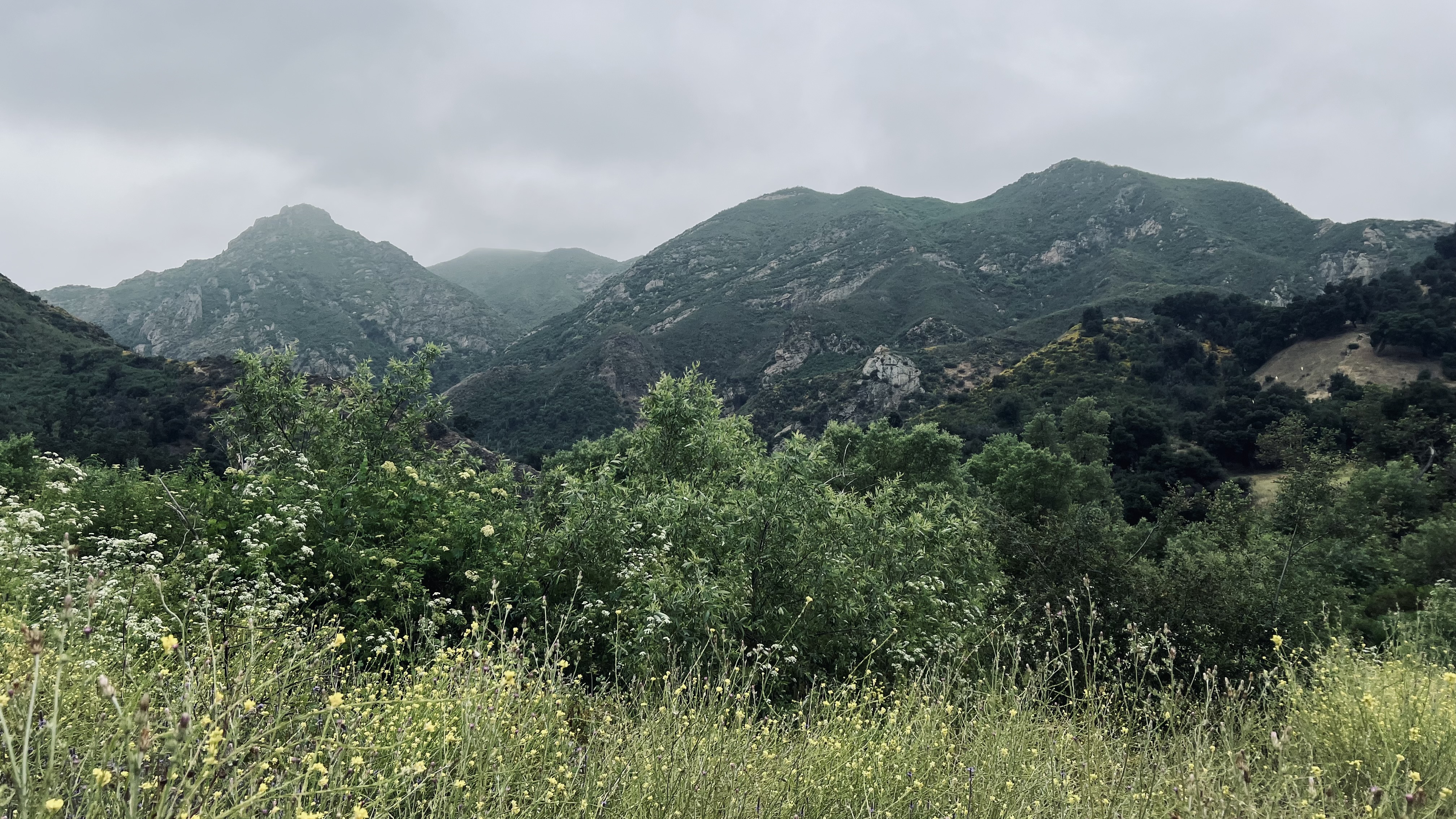
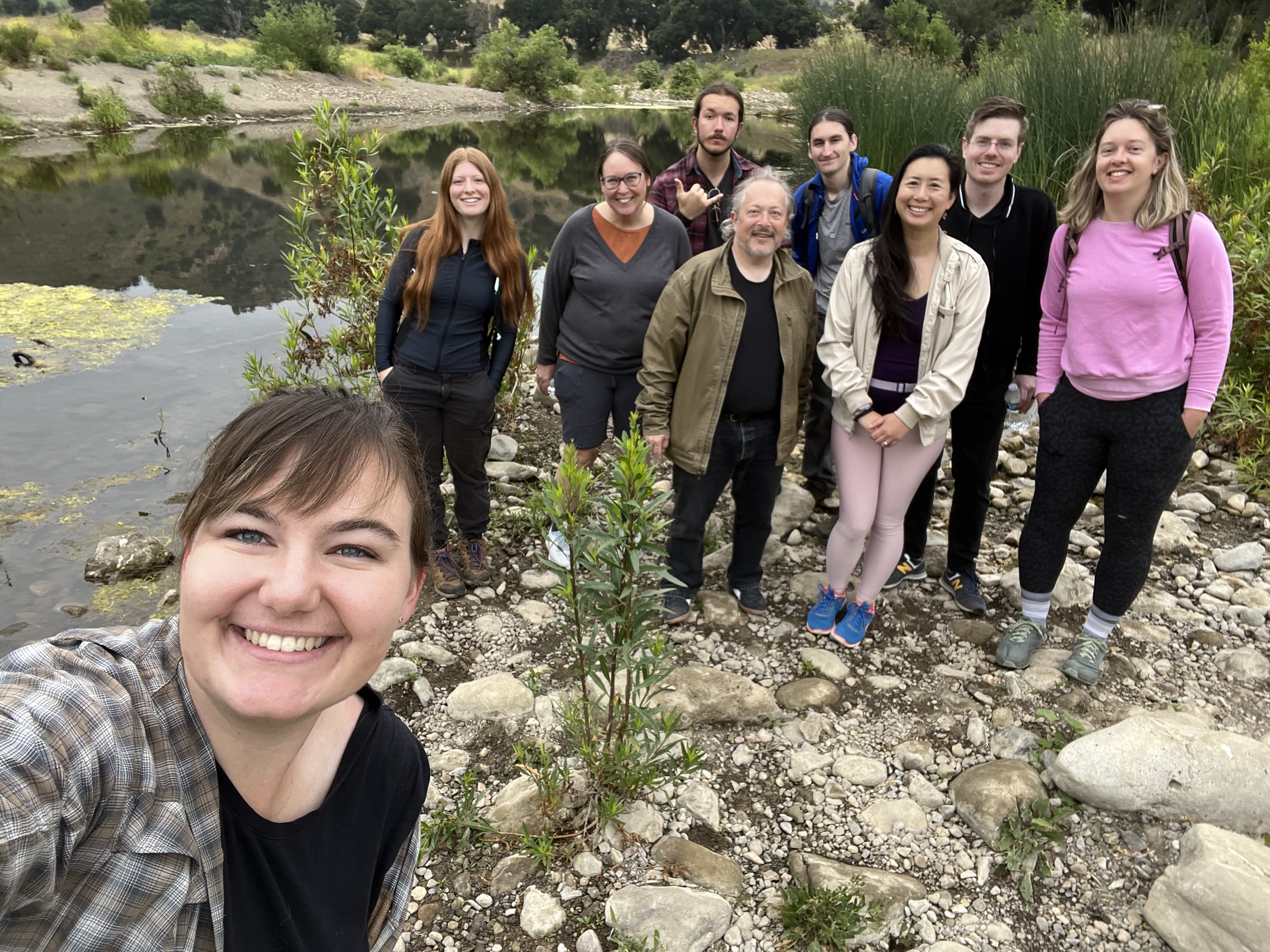

After the walk, we headed back to Pepperdine’s excellent Calabasas campus for a second day of talks.
At their best, the presentations consistently engaged with—and observe how medieval texts engaged with—human difference as cross cut by power in social organization. A number of graduate papers on medieval romance literature—on Thomas Malory’s Le Morte Darthur, Marie de France’s Lais, and The Wedding of Sir Gawain and Dame Ragnelle—stood out as truly careful explorations of the limitations of agency, desire, and the ability to assimilate into a community.
One paper, on an amazingly playful fifteenth-century French Romance, “Le Chevalier du Papegau” (“The Knight of the Parrot”) in which a young King Arthur goes questing with a singing parrot, reflected on how the word aventure—so much of a part of the notion of the quest—means “chance.” I thought that applied well to my own questing nature, my own desire to challenge myself by casting myself to chance on a seven hundred mile day.
The day wrapped up with final plenary lecture by Elizabeth Morrison on bestiaries, illuminated manuscripts of mundane and fantastical animals—fox, unicorn, dog-men, and marvels.
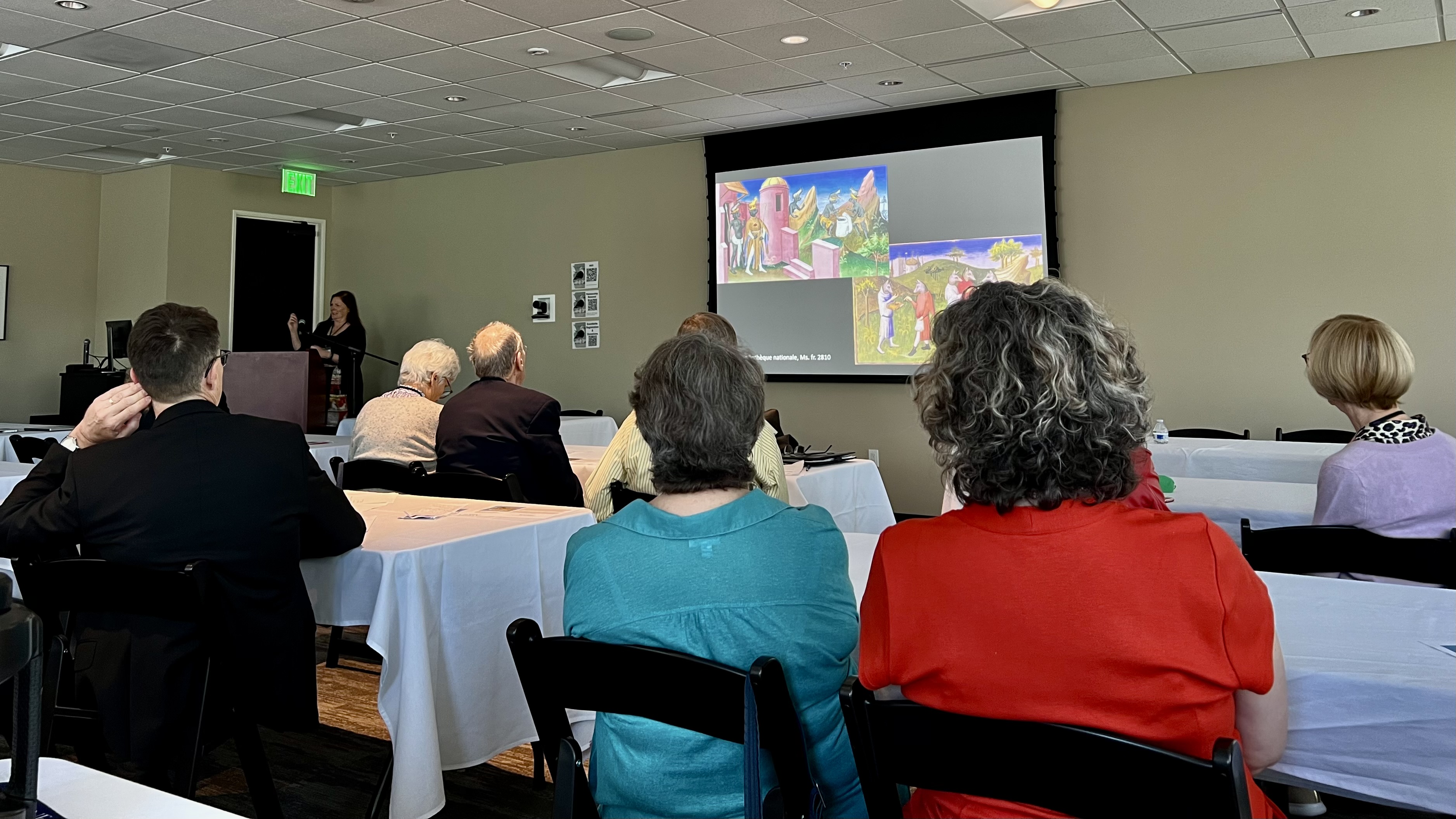
Morrison argued that medieval people used animals as a way of demarcating qualities of the non-human other, entities in the world who may appear humanoid but were ultimately less than human. Her argument was illustrated across the pages of the books she showed as evidence: half-human cannibals greedy to eat the wandering European trader, dog-men of unknown religious faith, swindler foxes who dressed like people but were cruel at heart. Animals, in Morrison’s argument, were not merely less than human to the medieval mind; they were the standard by which other humans could be measured as also less than human and treated appropriately.
The argument left me uneasy, for it tended to read the images literally and exclusively, to assert that Christian Allegory could be a pure measure of the production of knowledge, that medieval people did not weigh the contradiction between the received authority of books of knowledge against the lived experience of working in the world, and that they knew no empathy for the hedgehog building his hole at the edge of the path.
My own sense is that the people of the Middle Ages simultaneously placed great stock in both written authority and lived experience. “Experience, though noon auctoritee: Were in this world, were right ynogh to me,” announces Chaucer’s Wife of Bath, and in that she points out—amidst a tapestry of learned quotations woven into her lecture—that her own experience is capable of grounding her perspective on the world.
One of the most uncanny things about people is that we live in contradiction, indeed, we produce knowledge through a state of contradiction. We continually balance what we learn as true with what experience as believable. That balance leads us to the most unshakeable conclusions; it also allows us to maintain a kind of emotional commitment—the commitment of faith—in the face of any obstacle. Thus, we maintain our difference even as it is crosscut by the hard truths of power and injustice in the world.
Regardless of the bestiaries, it is impossible for me to imagine that medieval people—so much closer to the animal world than we are now—could not imagine empathy for their fellow travelers in this world.
With that, I jumped on my fearsome steed and went to find my aventure on the freeways of Los Angeles.

 Onwards!