

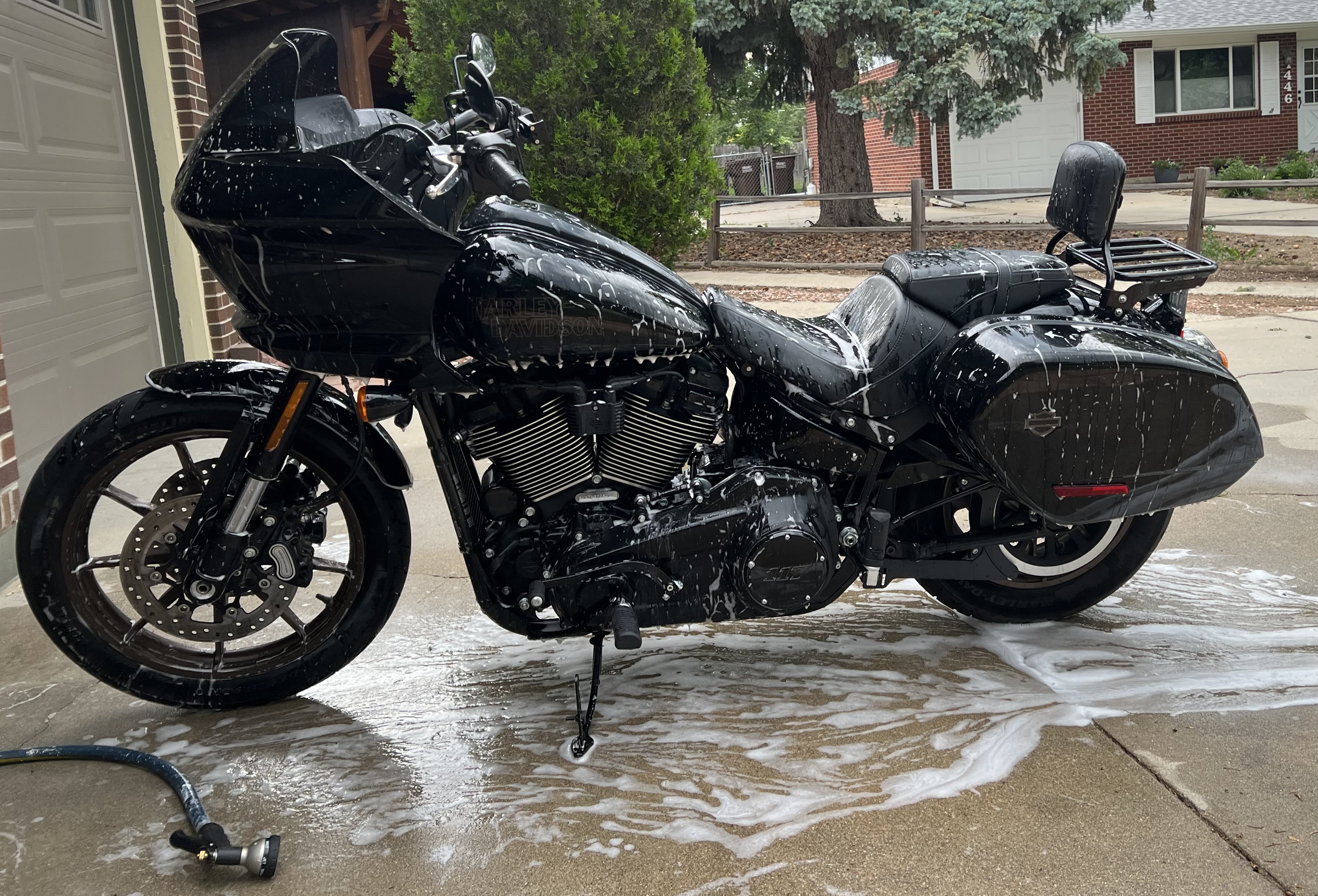
Last night I washed the Rocket.
Today I took it down to High Country Harley Davidson for an oil change. Brett is going to experiment with changing the risers that hold up the bars—what more can I ask?
Thanks, Brett.
It’s really nice to have a home base dealership that I can rely on.

As a rider, my chief ability is sitting. Sitting indefinitely. I can do 1000 miles on a bike without a windshield. That’s Minneapolis to Boulder. No problem.
I can sit longer than some, I think. Hardly a skill and not much of a talent but so it is.
That and I guess there is some foolhardiness, as well.
Got my first bike at 13. I’ve been riding forty six years, now. Plenty of years I didn’t ride at all, but many of them I did.
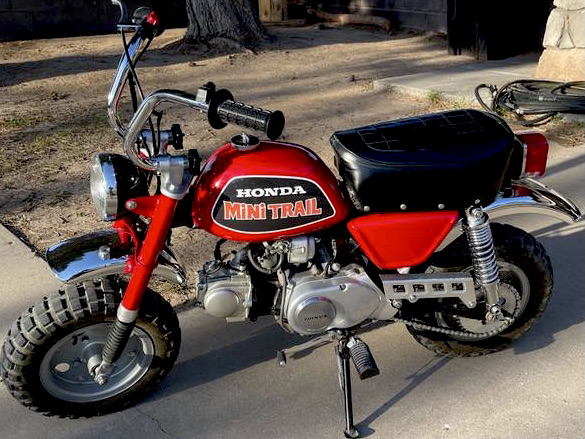
Forty six years is a long time to keep at something. Embarrassing to say, I’m still trying to get the hang of this motorcycling thing.
Coming away from the ride, I need to work on three techniques:
- Don’t brake so damn much! A motorcycle’s weight naturally shifts to the rear tire as the bike moves forward. Engaging the front brake rapidly transfers the bike’s weight to the front tire, compressing the front suspension and literally leaning the rider forward. It also unloads the weight from that rear tire, lightening it up so the rear brake becomes less effective and more prone to locking. By default, then, the front brake is the primary means of stopping a motorcycle. Still, the rider perceives this weight transfer as a loss of control, as if greater forces than the rider’s intention are at work (and they are: physics!). Slowing down by downshifting and using the engine’s compression avoids this problem, creating a feeling of control as one enters a turn. I brake too much before a turn. I need to stay off the brakes and stay in control.
- Look all the way ‘round. It’s important to scan the roadway for obstacles. Somewhat magically, people naturally move in the direction that they are looking. Their sight also fixes their attention. It is wise, therefore, to look all the way through a turn, especially in a U-turn or a corkscrew on a mountain pass or off ramp, so that your attention is fixed on your goal: getting to the exit of the turn. At times this means actually turning one’s head all the way over one’s shoulder to see where you are headed. I tend to scan the road in front of me, look down the road, and then check for obstacles again. This series of actions creates a jerky, chaotic perspective. I need to scan the road once and then look all the way through.
- Don’t overthink. I am so very much in my head that I often imagine negative scenarios. “What if traffic comes to a screeching halt right now?” “Boy that would be an awful cliff to drive off!” It’s good to think ahead, but more times than I care to admit these thoughts inspire stupid actions— braking too hard at the next red tail light, target fixating on the cliff, and otherwise overcompensating out of anticipated fear. I need to keep a clear head.
Small lessons and big lessons.
Following my logic that motorcycling is a metaphor for life, I recognize that in life I sometimes come up too short on a decision (overbrake) or fixate on a short-term problem rather than pass through it and look all the way through to the desired outcome. I often get in my head, rather than letting something work itself out in the course of time.
All these issues are about fear. That’s the common denominator.
In each case fear—fear of turning, fear of short-term obstacles, fear of the future—paradoxically causes dangerous behavior. I say “paradoxically” because one might think of fear as a saving grace, an internal barometer for trouble.
Fear is inarticulate. It blinds us. It makes us forget our training, and, as in the case of so many things, it makes our reactions broad and without finesse.
It is reasonable to be afraid of the unknown. Taking a quick action to change the situation has a natural appeal. Hitting the brakes sounds like it would solve many a problem because it suggests an affirmative, decisive action.
It is what I would term a hard response.
But hard responses are often too hard and end up destabilizing the situation, creating new problems. It turns out that smoothness, not jerking the bike onto the front wheel or changing one’s line of sight, or distracting oneself, is harmonious with the fast and fluid operation of motorcycles.
The goal of smoothness requires soft responses. I would extend that to much more in life—being soft with people, being soft in stressful situations, looking through obstacles to see the end result, in general pursuing smoothness—is far more effective than playing whack-a-mole or attempting to force things
As Adela once said: trust the process.
She is right.
 Onwards!
your last post reminds me of a saying among auto racing drivers – slow hands, fast car.
LikeLiked by 1 person
Re “soft responses,” tai chi nerds would say “fang song”: loosen, open, stretch, soften, relax. Sounds easy, but it’s very hard because it means learning new reflexes.
That’s probably what racing drivers have to learn, too.
LikeLiked by 1 person